Big Question Key Post

The Internet and social media hold some of the greatest potential to advance social movements and political mobilizations. Whenever there is a cause that needs support and media attention, the first place people turn to is social media in order to get information out. Twitter and Instagram play a large role in helping mobilize these social movements and political mobilizations. For example, when the George Floyd incident happened, Twitter brought people from around the world to the cause. Unlike traditional media sources like CNN, Fox, ABC, etc., Twitter and Instagram provide insight and opinions from people of all different backgrounds.
The internet also holds potential because it can bring people together in order to boycott or protest something that they find unfair. Imagine if Martin Luther King Jr. had Twitter or Instagram. The word for the march on Washington would have spread like wildfire throughout the United States. Consequently, the march and all of the other peaceful protests he assembled would have most likely been much larger. With the larger support the Civil Rights movement had because more people would have received the information quicker, African-Americans would have likely had to fight for equality for a lot less time.
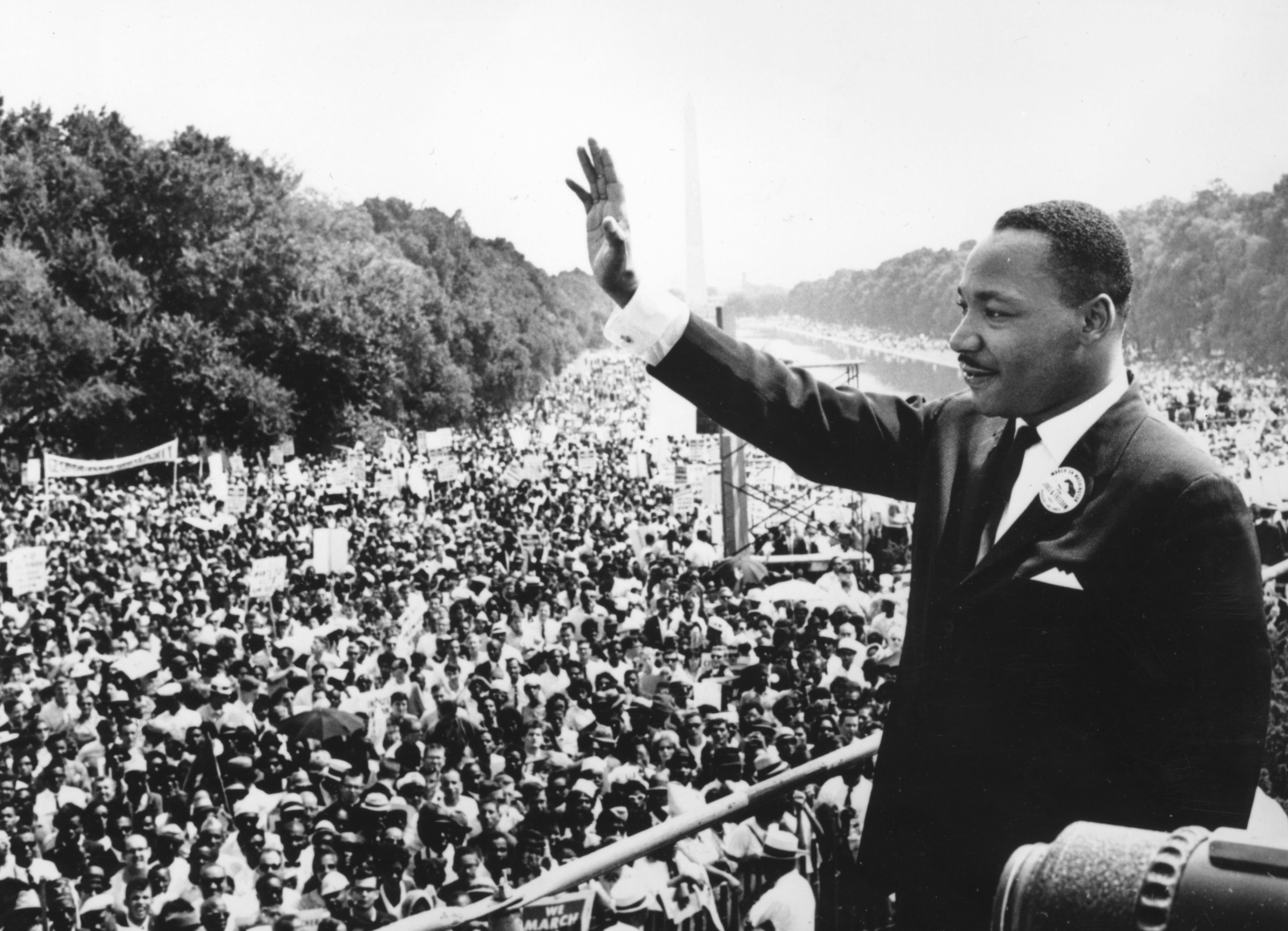
(CNN)
I also think that the internet and social media can help develop first amendment law. In particular, I believe that companies like Twitter and Instagram banning content that doesn't fit their platform's requirements will be a huge topic of conversation when it comes to first amendment law. Free speech scholar Nadine Strossen explains how the First Amendment applies to private actors and—whether or not it does—the importance of providing access to what the Supreme Court calls the "modern public square." I think that blogs would be more substantial to first amendment law because blogs are not owned by a private company and cannot be censored by anything.
Blogging also helps advance the idea of the eight values of free expression. Blogs allow people to express their feelings and opinions on a variety of different things. For example, their views on the President, American foreign policy, cryptocurrency and much more. These opinions, whether they are good or bad, help support the eighth theory of free speech. That theory is: Our system is not supposed to be one of mob rule. The First Amendment protects minority views, no matter how unpopular. You have a strongly protected right to disagree with the government — and everyone else. In fact, it is your patriotic duty to criticize the government. I also think blogs would agree with the seventh theory of free speech in that, "A community in which free speech is valued and protected is likely to be a more energized, creative, interesting society as its citizens actively fulfill themselves in many diverse and interesting ways." By encouraging everyone to speak their own mind about what they feel is right, it becomes the catalyst for the United States to become more creative, energized, and interesting.

Altogether, I thought this class was very interesting, and I learned a lot. I enjoyed coming to this class on Tuesdays and Thursdays because we were encouraged to speak our minds and contribute to conversations that Dr. Smith was having. I learned how to take succinct notes that would help me on my quizzes that he gave us, and I also learned how the United States has been shaped for good and for bad by first amendment law. The structure of the class was never boring to me because Dr. Smith always made sure to spice up the curriculum with mock trials, EOTOs, and movies that we would watch in class. If I had advice for those taking this class next year it would be to do the assignments when they're assigned and not when they're due. This will save you so much time and energy in the long run and will not leave you stressed out at the end of the semester when you have to write six blogs.
Comments
Post a Comment