Samuel Morse
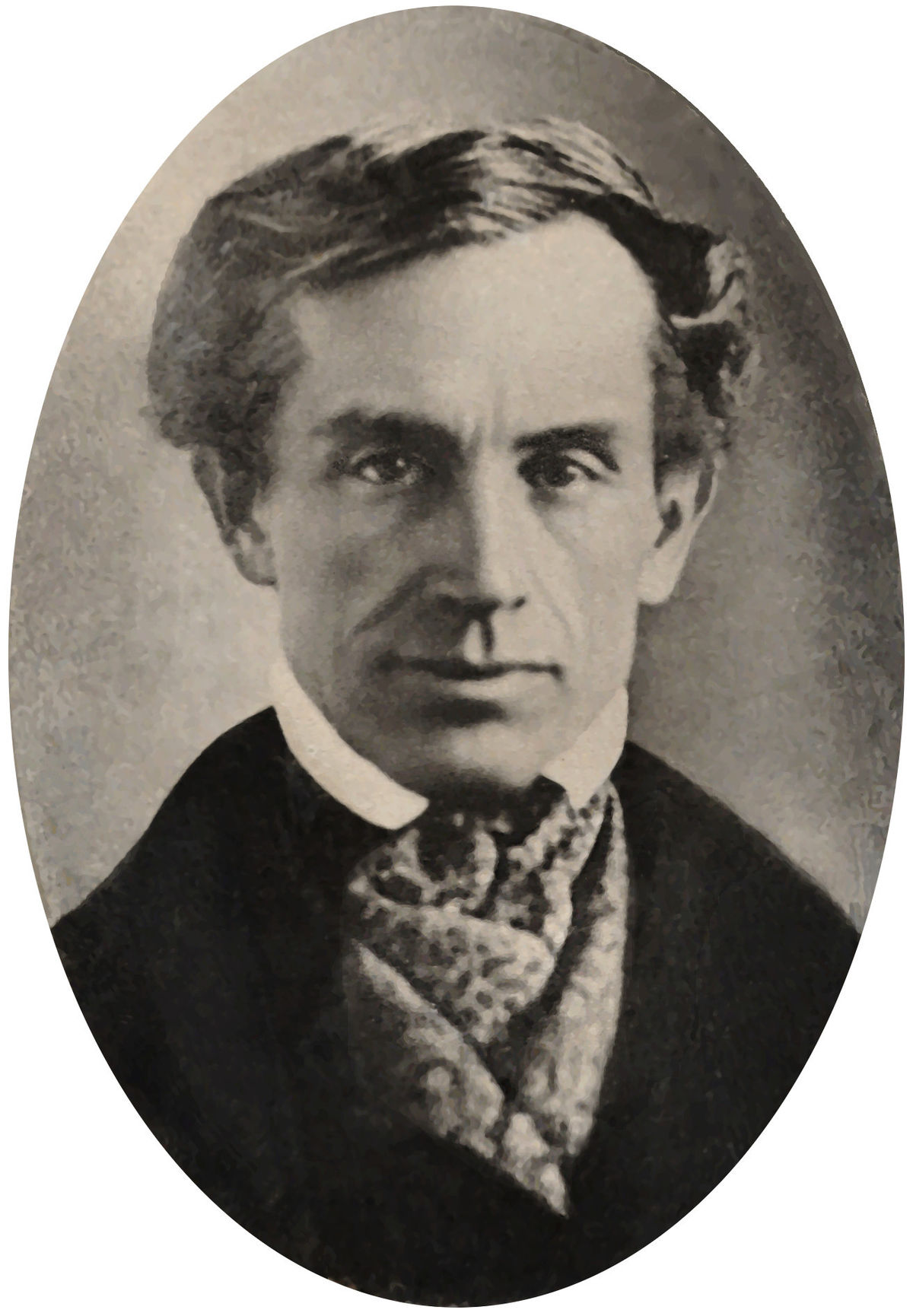
Samuel Morse was born on April 27, 1791 in Charleston, Massachusetts. Best known for his work on inventing the telegraph, he also invented morse code with his friend Alfred Vail that continues to serve the world today. Morse graduated from Yale in 1810 and shortly went to England afterwards to study English art. However, during the war of 1812 between Great Britain and the United States, Morse became passionately pro-American in all things that he did. For example, he decided to run for the mayor of New York City under a "Nativist" ticket, a movement that was violently anti-immigrant and anti-Catholic. This viewpoint as well as other conservative viewpoints would lead to his belief of the American institution of slavery being sanctioned by God.
In his treatise, "An Argument on the Ethical Position of Slavery," he wrote: "My creed on the subject of slavery is short. Slavery per se is not sin. It is a social condition ordained from the beginning of the world for the wisest purposes, benevolent and disciplinary, by Divine Wisdom. The mere holding of slaves, therefore, is a condition having per se nothing of moral character in it, any more than the being a parent, or employer, or ruler."
Despite living in the North, Morse believed that slavery was a positive good that should be spread throughout the United States. He saw slavery as a beautiful and righteous institution given by God that was beneficial to both the slaves and the masters. He is quoted as saying:
- Are there not in this relation (of master to slave), when faithfully carried out according to Divine directions, some of the most beautiful examples of domestic happiness and contentment that this fallen world knows? Protection and judicious guidance and careful provision on the one part; cheerful obedience, affection and confidence on the other.
- Christianity has been most successfully propagated among a barbarous race, when they have been enslaved to a Christian race. Slavery to them has been Salvation, and Freedom, ruin.
In addition to Morse believing that slavery was a beautiful and righteous institution created by God, Morse also believed that to oppose slavery was a grave sin against God. He even argued that the Church should excommunicate those who did not support the expansion of slavery throughout the United States despite being anti-Catholic. He disparaged Christian abolitionists, saying:
- Conscience in this matter has moved some Christians quite as strongly to view Abolitionism as a sin of the deepest dye, as it has other Christian minds to view Slavery as a sin . . . Who is to decide in a conflict of consciences? If the Bible is to be the umpire, as I hold it to be, then it is the Abolitionist that is denounced as worthy of excommunication; it is the Abolitionist from whom we are commanded to withdraw ourselves, while not a syllable of reproof do I find in the sacred volume administered to those who maintain, in the spirit of the gospel, the relation of Masters and Slaves.
- If the servile relation is an essential and indispensable divinely arranged part of the Social System, is not the attempt to blot it out altogether by force in any community, under the plea that it is a sin, an evil, a wrong, or an outrage to humanity, or indeed in any other place, sacrilegious?
Along with his pro-slavery views, Morse was also president of two pro-slavery organizations: the American Society for the Promotion of National Unity and Society for the Diffusion of Political Knowledge. They believed that "[God entrusted them with] four million beings, incapable of self-care, [and] were entrusted to Southerners." Morse and his organizations also critiqued Abraham Lincoln and his policies after the Emancipation Proclamation stating that "Fanaticism rules the hour. The fanatic is on the throne. I use the term fanatic in no loose sense. Fanaticism is a frenzy, a madness ... a spirit of the pit, clothing itself in our day in the garb of an angel of light, the better to deceive the minds of the unthinking and the simple."
Comments
Post a Comment